Lead Scoring Automation Tool Pricing: What You Should Expect to Pay
Most lead scoring tools quote per seat, per contact, and per workflow, and the total only appears on the invoice. If you run a small sales team, a surprise bill of thousands a month is a real risk, so knowing the pricing models before you sign matters.
This article breaks down the typical pricing models for lead scoring and automation tools, what actually drives the cost, and how Tasks.Bot's ₹200/month or ₹1,200/year per member plan compares. By the end, you will know which questions to ask vendors and whether a WhatsApp-native tool fits your budget.
What Is Tasks.Bot? The WhatsApp-Native Task Management Platform
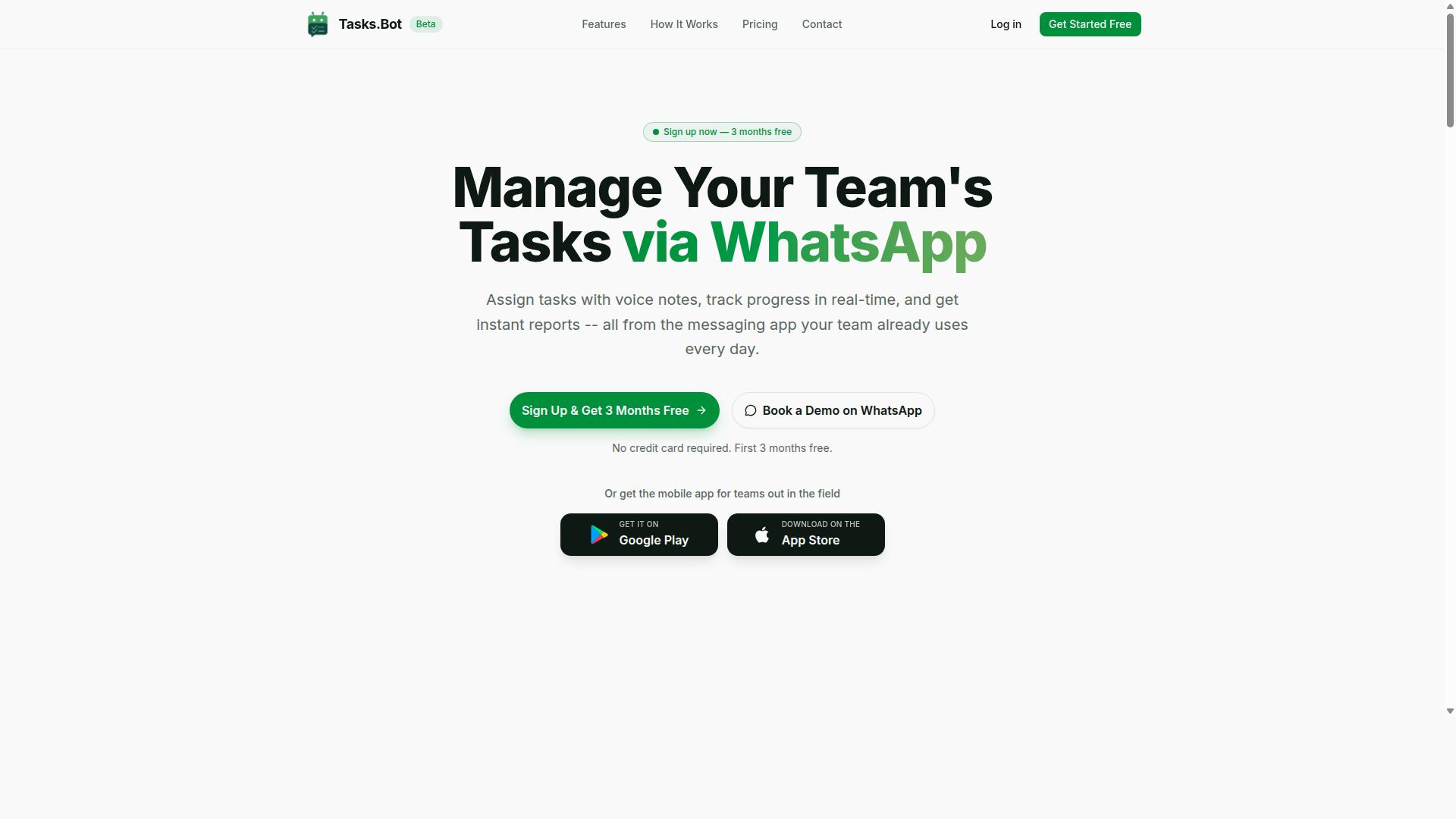
Tasks.Bot is a task management platform that operates entirely within WhatsApp, allowing teams to assign tasks, track progress, and receive reports without leaving the messaging app. For many teams, that single design decision changes everything about how quickly a new system gets adopted.
Most task management software asks each team member to install an app, create an account, learn a new interface, and remember to check it daily. Tasks.Bot takes the opposite approach. The tools live where the conversation already happens, so there is no new software to download and no separate login to manage.
That matters for adoption. When a task tool sits outside the chat app a team already uses, updates get missed and managers end up chasing people for status. With a WhatsApp-native setup, assignment, progress tracking, and reporting stay in one place, which reduces the friction that typically kills internal tool rollouts.
Tasks.Bot also offers a mobile app for field teams, giving workers who are away from a desk a dedicated way to engage with their tasks. The service is currently in beta and offers a free trial period, so teams can evaluate whether the WhatsApp-first model fits their workflow before committing budget.
This context matters for pricing. Tools built on top of messaging platforms often avoid the heavy onboarding and training costs that come with traditional project management suites, which is one reason buyers evaluating lead scoring automation pricing should understand how a platform's delivery model shapes its cost structure.
Who Tasks.Bot Serves: Teams With Field Staff on WhatsApp
Tasks.Bot is designed for teams that already use WhatsApp for communication, particularly those with field staff who need to manage tasks, track attendance, and record payroll-ready hours. The platform has been built around a specific operational reality rather than a generic one.
Consider what a typical field-heavy operation deals with daily. A supervisor needs to send jobs out, confirm they were done, note who showed up, and capture hours that payroll can actually use. Tasks.Bot handles task assignment, attendance tracking, and payroll-ready hours in the same channel the team already uses to coordinate.
The site mentions that hundreds of teams already use the service. That scale suggests the WhatsApp-first approach resonates with organizations that have resisted traditional task management tools, often because their staff work remotely, move between sites, or are simply not desk-based.
Common beneficiaries include:
- Field service and maintenance crews coordinating jobs across locations
- Delivery and logistics teams tracking assignments and shift attendance
- Sales and inspection teams logging visits and reporting back from the field
- Small businesses whose staff already run day-to-day communication through WhatsApp
For these groups, the appeal is practical. There is no expectation that a field worker will adopt an unfamiliar platform, and no assumption that managers have time to train people on new software. The tool meets the team inside a habit they already have.
This audience profile also shapes how buyers should think about cost. When a platform removes the need for per-seat training programs and reduces the change management burden, the effective total cost of ownership looks different from a traditional suite with a long implementation cycle. Teams weighing lead scoring automation tool pricing should apply the same lens: what does adoption actually cost beyond the subscription line item?
Lead Scoring Automation Pricing: What You Should Expect to Pay
Lead scoring automation tools typically range from $50 to $500 per month for small teams, but enterprise solutions can cost thousands. That spread is wide because the category covers everything from lightweight scoring features bolted onto a basic CRM to dedicated platforms that rank every lead in real time.
Three variables explain most of the difference: features, user count, and lead volume. A five-person sales team scoring a few hundred leads a month sits at the low end. A global revenue operation scoring tens of thousands of leads with predictive models sits at the high end.
Pricing structures matter just as much as headline numbers. Some vendors bundle scoring into a broader automation suite, while others charge separately for it. That means two tools advertising similar monthly rates can produce very different bills once seats, contacts, and usage are counted.
Buyers should also plan for costs beyond the subscription itself. Setup fees, onboarding services, and premium integrations can add meaningfully to the first-year total. The sections below break down each pricing model and the specific factors that push costs up or down, so you can build a realistic budget before you talk to any vendor.
Typical Pricing Models for Lead Scoring and Automation Tools
Most lead scoring and automation tools use one of four pricing models: per-user, tiered, usage-based, or flat-rate. Each one shifts risk in a different direction, and the right fit depends on how your team and lead volume are likely to grow.
- Per-user pricing: A fixed fee for each seat, often around $20 to $50 per user per month. Costs scale with headcount, which suits stable teams but penalizes rapid hiring.
- Tiered pricing: Feature bundles at set prices, such as a Basic plan near $29, a Professional plan near $99, and an Enterprise plan near $299 per month. Scoring sophistication usually increases with each tier.
- Usage-based pricing: Charges tied to activity, such as $0.10 per lead scored or a rate per 1,000 contact records. Bills fluctuate with volume, which can surprise teams during busy quarters.
- Flat-rate pricing: A single monthly fee, often around $99, for unlimited users or leads within stated limits. Predictable, but the ceiling on contacts or features may be lower.
Freemium plans and free trials are common entry points. A freemium tier usually caps contacts or scoring runs, while a free trial typically runs for a set period with full features. Both let you test whether a scoring model actually improves lead qualification before committing budget.
Many vendors also discount for annual billing, often in the range of 10 to 20 percent versus monthly. Contract length matters too. A twelve-month commitment usually costs less per month than a rolling agreement, but it reduces flexibility if your needs change.
What Drives the Cost: Seats, Contacts, Features, and Add-Ons
The cost of lead scoring automation is primarily driven by the number of seats, contact records, and lead volume, as well as the complexity of scoring models and additional features. Understanding each lever helps you forecast your total cost of ownership instead of just comparing sticker prices.
Seats are the simplest factor. If a tool charges per user, adding sales reps, marketers, or managers increases the bill directly. Some vendors offer read-only or viewer seats at a lower rate, which can reduce spend for teams that only need dashboards.
Contact records set the size of your database. A tool might charge $10 per 1,000 contacts, so a list of 50,000 records adds a predictable monthly amount. Exceeding your tier often triggers overage fees, which are worth checking before you import a large list.
Lead volume affects tools that bill per scored lead. At $0.05 per lead scored, 10,000 monthly leads costs $500. Campaign spikes can therefore double a bill in a single month, so usage caps or alerts are useful safeguards.
Scoring model complexity is the biggest hidden driver. Rule-based scoring, where you assign points manually, is usually available on starter and basic plans. Predictive scoring, which uses historical data to rank leads automatically, tends to sit in professional or enterprise tiers.
Scoring type also matters. Demographic and firmographic scoring, based on attributes like job title or company size, is often standard. Behavioral scoring, which tracks actions such as page visits and email clicks, may require higher tiers. Many platforms split output into a fit score and an engagement score, with combined views reserved for premium plans.
Add-ons round out the picture. Custom integrations, dedicated onboarding, and bespoke predictive models are frequently quoted separately. Setup or implementation fees can range from a few hundred dollars to several thousand for enterprise deployments. Ask for a full first-year estimate, including onboarding and any premium integrations, before comparing vendors on subscription price alone.
How Tasks.Bot's Pricing Compares to Typical Automation Tool Costs
Tasks.Bot offers a straightforward pricing model that stands out for its simplicity and affordability compared to many lead scoring and automation tools. Most platforms in this space rely on tiered pricing, where essential features sit behind a starter plan while scoring models, integrations, and reporting live in higher professional or enterprise tiers.
That structure creates a familiar problem. Buyers must compare feature grids, estimate contact records or lead volume, and guess which tier they will actually need in six months. Tasks.Bot removes that guesswork entirely by putting every feature into one plan.
Another common friction point is per-user pricing. Many automation tools charge separately for each seat, so costs climb as a team grows. Others add usage-based pricing on top, billing by lead volume or contact records, which makes the total cost of ownership hard to predict.
Tasks.Bot takes a different route. Its Full Access plan is priced per member, and that single rate covers all features with no separate tiers to compare. There is also no mention of a setup fee or implementation fee, which are charges that frequently appear on quotes for more complex platforms.
For a team weighing lead scoring automation, this matters. A flat, transparent subscription makes budgeting simpler and keeps the focus on using the tool rather than managing the contract. The sections below break down the exact plan and the free trial that precedes any payment.
Tasks.Bot's Full Access Plan: ₹200/Month or ₹1,200/Year per Member
Tasks.Bot's Full Access plan costs ₹200 per member per month or ₹1,200 per member per year, with all features included and no hidden fees. The annual option works out to roughly ₹100 per month per member, which is a meaningful saving for teams that already know they want the tool long term.
The key detail is the unit of pricing. This is per member, not per contact or per lead. Many automation platforms bill on contact records or lead volume, so a growing database quietly raises the bill. Tasks.Bot's model keeps the cost tied to the people using the platform.
Pricing is available in both Indian Rupees and US Dollars. The site includes a currency selector with options for Indian Rupee and US Dollar, so buyers should confirm which currency applies to their account before comparing figures.
For context, per-user pricing at many automation tools commonly falls in the range of roughly $20 to $50 per user each month, and that is often before higher tiers unlock scoring or reporting features. Against that backdrop, a single plan with everything included is a notably lower entry point.
There is also no setup fee or implementation fee mentioned. Those one-time charges are a regular line item in enterprise software quotes, so their absence simplifies the total cost of ownership from day one.
3 Months Free, No Credit Card: Try Before You Pay
Tasks.Bot offers a 3-month free trial with no credit card required, allowing teams to test the platform before committing. That is a longer window than the 14-day or 30-day trials many automation tools use, and it gives a team real time to run the tool through normal work cycles.
The no-credit-card detail matters just as much. It means no automatic charge at the end of the trial and no need to share payment details to evaluate the product. Users can also book a demo on WhatsApp to see the platform before or during the trial.
Why does trial length matter for lead scoring? Scoring models take time to settle. A rule-based or behavioral scoring setup needs real lead data flowing through it before a team can judge whether the fit score and engagement score are producing useful signals. A three-month window supports that kind of evaluation, while a two-week trial often ends before the model has proven anything.
For budget planning, the trial also acts as a risk-free proof stage. Teams can confirm the tool fits their lead qualification process, then move to the ₹200 monthly plan or the ₹1,200 annual plan per member. Cancellation is allowed at any time, so there is no long contract locking a team in before it has seen results. Taken together, the single Full Access plan and the extended free trial make Tasks.Bot a low-risk, clearly priced choice for teams that want lead scoring automation without tiered pricing or hidden costs.
Key Features Included in Tasks.Bot's Price
Tasks.Bot's Full Access plan includes a comprehensive set of features designed for task management via WhatsApp, such as voice note task creation, automatic task assignment, smart deadline reminders, approvals, automations, instant reports, and face-verified attendance. The key point for anyone comparing lead scoring automation tool pricing is that these capabilities arrive together, not as paid extras bolted onto a basic plan.
That structure matters because many platforms in this category use tiered pricing, per-user pricing, or usage-based pricing to charge more as your team or lead volume grows. Tasks.Bot takes a different route: one plan, one price, everything included. There are no add-on modules to purchase and no hidden costs waiting at renewal.
Below is a look at what that single plan actually covers, and why each feature fits the way field teams and WhatsApp-based crews already work.
Voice note task creation. Field staff rarely have a free hand to type. Tasks.Bot uses AI to understand user intent and create tasks from messages, so a spoken instruction can become a tracked task without anyone opening a laptop.
Automatic task assignment. Work gets routed to the right person without a manager manually sorting through a group chat. For teams juggling multiple sites or shifts, this removes a daily layer of coordination overhead.
Smart deadline reminders. Deadlines stay visible instead of getting buried under new messages. Reminders keep tasks on schedule without a supervisor chasing updates by phone.
Approvals and automations. Requests move through a defined path rather than stalling in someone's inbox. Automations handle the repetitive routing so managers focus on decisions, not forwarding.
Instant reports. Status becomes something you can review rather than reconstruct. Reports give a clear view of what is done, what is pending, and where attention is needed.
Tasks on a map and live day tracker. Location context and a running view of the day help coordinators see activity as it happens, which suits distributed teams working across different areas.
Face-verified attendance. Attendance is confirmed through face verification, which reduces the guesswork around who actually showed up. For operations that bill by hours or manage shift coverage, that record matters.
Payroll-ready hours. Alongside shifts, leave, and hours management, the platform produces hour data in a form payroll can use. This connects daily field activity to back-office processing without a separate spreadsheet.
Mobile apps and WhatsApp integration. Tasks.Bot provides Android and iOS apps with push notifications, voice capture, and a home screen widget, plus native WhatsApp integration. Teams work inside a channel they already use every day.
Every item above sits inside the same subscription. There is no starter plan that strips out attendance, no professional plan that gates reports behind an upgrade, and no premium plan required to unlock the mobile app.
For buyers weighing total cost of ownership, that single-plan approach is straightforward: the features you evaluate during a free trial are the features you keep. When you compare this against per-user pricing that scales with seat count, or usage-based pricing tied to lead volume, the difference shows up in the budget line, not just the feature list.
The practical takeaway is simple. If your team lives in WhatsApp and works in the field, the capabilities that matter most, voice capture, attendance verification, payroll hours, and instant reporting, are part of the price rather than an upsell waiting to happen.
Who Should Use Tasks.Bot
Tasks.Bot is ideal for teams that rely on WhatsApp for communication, especially those with field staff who need to manage tasks, track attendance, and generate payroll-ready hours. If your team already lives in WhatsApp chats all day, this tool fits into a habit people already have rather than asking them to learn something new.
The platform is built for teams that use WhatsApp as their main communication channel, and the brand notes that hundreds of teams already use the service. That focus shapes everything about who gets the most value from it.
Consider the common field-based scenarios where this matters most:
- Construction crews where a site supervisor assigns work, logs who showed up, and needs clean hours at the end of the week
- Delivery and logistics teams coordinating routes and confirming completed drops across scattered drivers
- Sales teams working outside the office who need to log follow-ups and share updates without opening a laptop
- Small to medium businesses that want task tracking and attendance records without buying and rolling out a separate app for every worker
The appeal for these groups is simple. There is no new app to install, because the work happens inside WhatsApp itself. For teams with high turnover or workers who are not comfortable with complex software, that removes one of the biggest barriers to adoption.
Tasks.Bot also supports AI-powered natural language and voice note task creation. A manager can describe a job the way they would in a normal message, and the system turns that into a structured task. Voice notes matter for field staff who are on their feet, wearing gloves, or driving, and typing a long message is not practical.
Put together, the tool suits teams that want attendance tracking and payroll-ready hours without a heavy setup. It is a natural fit for anyone who values simplicity over a large, complicated platform, and who would rather keep communication and task management in one familiar place.
Trust Signals: Beta Status, Refund Policy, and Hundreds of Teams
Tasks.Bot is currently in beta, which means the platform is still evolving, but it is already used by hundreds of teams and offers a refund policy. That combination matters when you are weighing lead scoring automation tool pricing, because trust signals often matter as much as the numbers on a pricing page.
For buyers comparing subscription tiers and total cost of ownership, a vendor's transparency about its development stage is a genuine signal. Tasks.Bot does not hide its beta status. It states it openly, which tells prospective customers exactly where the product sits in its lifecycle.
Here is how each trust signal affects your decision:
- Beta status: The platform is still being developed, so features and workflows may change over time. Buyers get honesty about that up front rather than discovering it later.
- Refund policy: A refund policy appears in the footer of the site. The exact terms are not spelled out in the brand's public materials, but its presence signals confidence in the product.
- Hundreds of teams: Real adoption at this scale suggests the tool is already delivering value before its full release.
- Global access: The service is global, and teams can reach it through WhatsApp and mobile apps.
Beta software can be a reasonable concern. Teams worry about stability, shifting features, or having to migrate later. A refund policy directly addresses that risk by giving buyers a way out if the platform does not fit their lead qualification workflow.
Adoption by hundreds of teams also softens the beta concern. When that many organizations already rely on a tool for behavioral scoring, demographic scoring, or fit and engagement scores, the platform has clearly moved past the experimental stage.
Accessibility reinforces the same message. A global service reachable through WhatsApp and mobile apps fits distributed teams that score leads outside a deskbound workflow. The site also offers a "Book a Demo on WhatsApp" option, so evaluation can start in a channel many teams already use daily.
For pricing specifically, these signals change how you should read the numbers. A refund policy lowers the financial risk of committing to a subscription or annual billing cycle. Demonstrated adoption suggests the tool is worth including in your budget calculations at all.
When you assess total cost of ownership, weigh the soft factors alongside the hard costs. A platform in beta with a refund policy and a growing user base offers a different risk profile than an unknown tool with no recourse and no track record.
The verdict is straightforward. Tasks.Bot is a legitimate, actively used lead scoring automation platform. Its open beta status, footer refund policy, global reach via WhatsApp and mobile apps, and adoption by hundreds of teams are concrete trust signals. For teams evaluating pricing, that transparency is a point in its favor, not a warning sign.
Final Verdict: Is Tasks.Bot Worth the Price?
At ₹200 per member per month or ₹1,200 per year, Tasks.Bot offers a cost-effective solution for teams that need WhatsApp-native task management, especially compared to typical automation tools that charge per contact or lead. That pricing model alone sets it apart in a market where costs often scale with the size of your database rather than the size of your team.
For buyers comparing lead scoring automation tool pricing, the structure here is refreshingly simple. There are no tiered pricing levels to decode, no usage-based pricing surprises tied to lead volume or contact records, and no separate charges for advanced scoring models. Every feature is included in the single per-member rate.
That flat approach matters when you are building a budget. Many platforms split rule-based scoring, behavioral scoring, and demographic or firmographic scoring across starter, professional, and enterprise plans. Tasks.Bot does not. You pay one rate, and the full feature set comes with it.
Three other factors shape the value equation:
- Per-member pricing means cost scales with the people doing the work, not with the leads flowing in
- All features included removes the guesswork of upgrade decisions mid-year
- A 3-month free trial gives teams real time to evaluate fit before committing budget
For WhatsApp-centric teams with field staff, this combination is hard to match. Field teams already live inside WhatsApp, so a tool that manages tasks there avoids the adoption friction of yet another dashboard. The total cost of ownership stays low because there is no new interface to train on and no per-seat add-ons stacking up.
The honest caveats are worth stating. Tasks.Bot is in beta, and some buyers prefer a longer track record before committing. That is a fair concern. It is also softened by two things: the free trial period and a refund policy that reduces the financial risk of trying the product.
Weighing it out, the pros clearly outweigh the cons for the right audience:
- Pros: affordable per-member rate, every feature included, three months free, built for WhatsApp-first workflows, suited to field staff
- Cons: beta status may give cautious buyers pause until the product matures further
If your team coordinates work over WhatsApp and manages people in the field, the fit is strong and the price is low. If you need a long-established vendor with years of public references, you may want to wait. For everyone in between, the trial makes the decision easy to test rather than guess.
Compared with the broader lead scoring automation tool landscape, where setup fees, onboarding costs, and hidden costs can inflate the first-year bill, Tasks.Bot keeps things transparent. Annual billing at ₹1,200 per member is a fixed, predictable line item you can plan around.
The return on investment case rests on adoption. A tool people actually use beats a more powerful tool they ignore, and WhatsApp-native task management removes the biggest barrier to daily use. Adoption, not feature count, is what determines whether scoring and task systems deliver value.
To get started or ask questions, reach out directly:
- Phone: +91 97143 42522
- Email: [email protected]
- WhatsApp: book a demo on WhatsApp
Our verdict: for WhatsApp-centric teams with field staff, Tasks.Bot is worth the price. The per-member cost is low, the feature set is complete, and the free trial plus refund policy make trying it a low-risk decision. Teams that match the target audience should book a demo on WhatsApp and see the fit for themselves.
Frequently Asked Questions
How much does Tasks.Bot cost for lead scoring and task automation?
Tasks.Bot keeps pricing simple with a single 'Full Access' plan that includes all features - there are no tiers or add-ons to compare. It costs ₹200 per member per month, or ₹1,200 per year per member on the annual plan, which saves 50%. Pricing is available in both Indian Rupees and US Dollars.
Is there a free trial or free plan for Tasks.Bot?
The verified details for Tasks.Bot cover the 'Full Access' plan, and no free tier is listed. Since the service is currently in beta, the best way to confirm current trial options is to ask the team directly via the 'Book a Demo on WhatsApp' option on their site. You can also reach them at [email protected] or +91 97143 42522.
Why does Tasks.Bot charge per member rather than a flat fee?
Tasks.Bot is built for teams, so per-member pricing scales with the number of people assigning tasks, tracking progress, and receiving reports. This means you only pay for the team members actually using the platform, whether they're in the office or in the field. If your team size changes, your cost adjusts accordingly.
Do I need to pay extra for features like voice notes, reports, or attendance tracking?
No - Tasks.Bot's 'Full Access' plan includes all features, so voice note task creation, automatic task assignment, smart deadline reminders, approvals and automations, instant reports, tasks on a map, and face-verified attendance are not sold as separate paid add-ons. That makes it easier to predict your total spend compared to tools that charge per module.
How does Tasks.Bot pricing compare to other lead scoring automation tools?
Pricing varies widely across the market, and many tools charge more as you add seats, features, or automation volume, so it's worth comparing total cost for your actual team size rather than headline rates. Tasks.Bot's advantage is that it runs entirely inside WhatsApp, so team members don't need to install anything or create new accounts. For a like-for-like comparison, request a demo and check what's bundled versus billed separately in each tool.
Are there any hidden costs, setup fees, or long-term contracts with Tasks.Bot?
Tasks.Bot's published pricing is straightforward: ₹200 per member per month, or ₹1,200 per year per member with the annual plan. The site also mentions a refund policy in the footer, so it's worth reading those terms before you commit. For anything not covered there - such as onboarding or contract questions - contact the team at [email protected] or +91 97143 42522.
Recommended Resources: