WhatsApp Abandoned Cart Message Tools Pricing Guide 2026: What the Best Tools Cost
Your abandoned cart messages are sending, but the pricing page still confuses you. Some tools hide WhatsApp conversation fees, others charge per message, and the monthly total rarely matches the quote.
This guide breaks down what WhatsApp abandoned cart message tools cost in 2026, what Com.bot's Silver, Gold and Platinum plans actually include, and which add-ons, support rates and no-markup WhatsApp fees change your bill. You will finish knowing which plan fits your cart volume and whether Com.bot is worth the spend.
What Is Com.bot? The AI Unified Business Communication Platform Behind Abandoned Cart Recovery
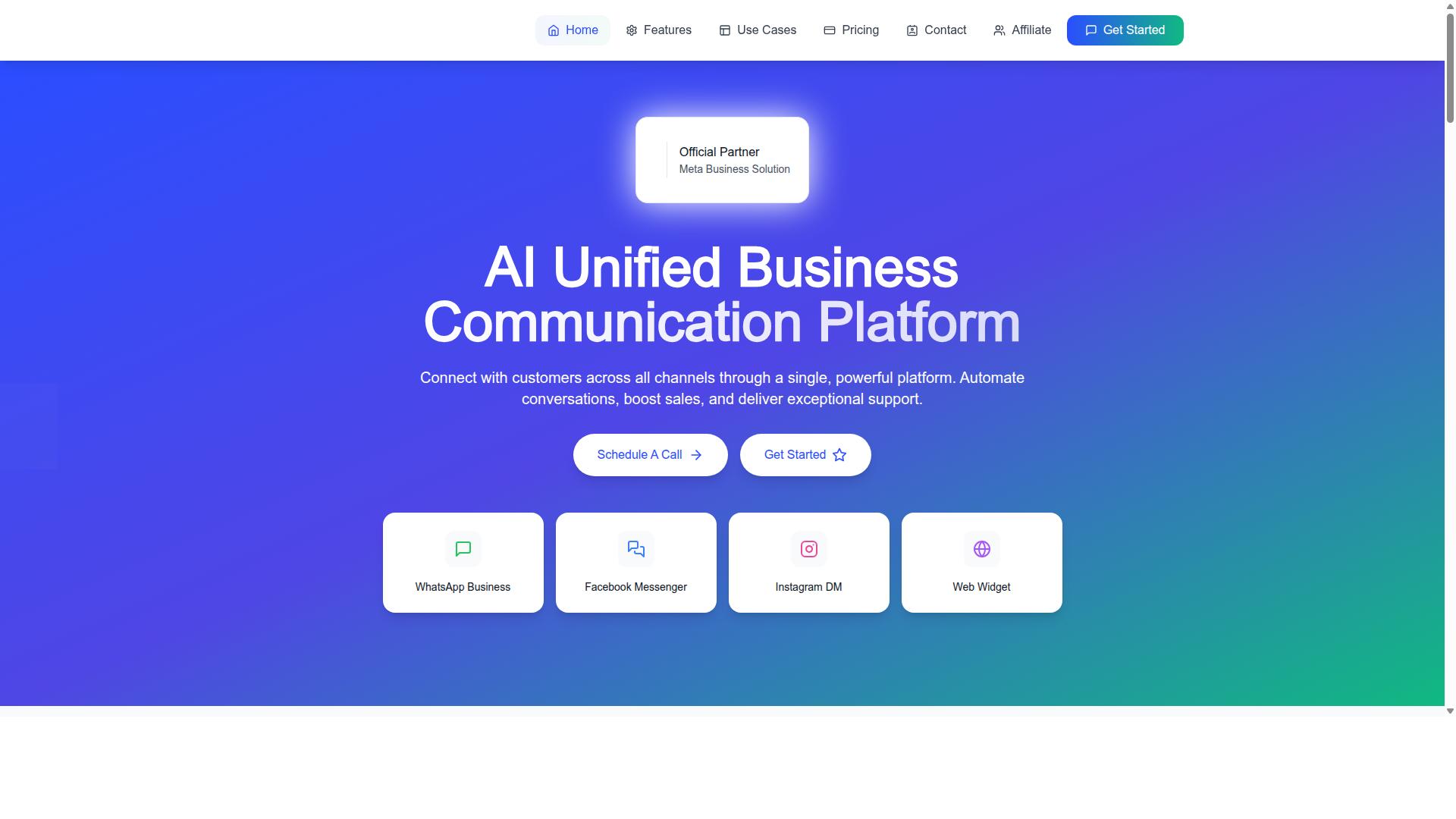
Com.bot is an AI-powered unified business communication platform that centralizes customer conversations from WhatsApp, Facebook Messenger, Instagram DM, and web widget into a single interface. For ecommerce teams studying the 2026 pricing landscape for WhatsApp abandoned cart message tools, that single interface is the foundation everything else builds on.
Instead of stitching together separate tools for each channel, businesses work from one platform. That matters for abandoned checkout recovery because a shopper who leaves a cart may return through a different channel than the one they started in. A unified system keeps that conversation connected rather than fragmented.
Com.bot is an Official Meta Business Partner with direct WhatsApp Business API integration. This status is central to the article's topic: it means the platform connects to WhatsApp through the official Meta route rather than through workarounds. For cart recovery, that distinction shapes how message template pricing, per-conversation pricing, and business-initiated conversation rules actually apply.
At scale, Com.bot processes 25M+ messages daily. That volume signals reliability for high-traffic stores running ecommerce messaging automation, where a delayed cart reminder can mean a lost sale. It also sets the stage for the sections ahead, which break down what the best tools cost in 2026 and how pricing models differ across the market.
The core value proposition rests on two pillars: seamless integration across channels and AI-driven automation. Together they let a business trigger recovery messages, handle replies, and track outcomes without juggling disconnected systems. The rest of this guide examines what that kind of platform costs and how to compare pricing fairly.
Who Com.bot Serves and How It Connects WhatsApp, Messenger, Instagram and Web
Com.bot serves a diverse range of businesses, from small e-commerce stores to large enterprises and government bodies, all seeking to automate and scale their customer communication. The common thread is a need to reach customers on the channels they already use, rather than forcing them onto unfamiliar ones.
The target audience includes businesses that rely on WhatsApp, Facebook, and Instagram for customer support, bulk messaging, and marketing automation. For cart recovery specifically, these are the channels where shoppers ask questions, compare products, and often abandon a checkout mid-decision.
Com.bot connects these channels through a unified inbox and multi-channel support. A message from WhatsApp, Messenger, Instagram DM, or a web widget lands in one place, so agents and automation rules work from a shared view. That matters for conversational commerce, where a fast, consistent reply can pull a hesitant buyer back to a completed order.
Reach is global. Com.bot is available in 50+ countries and is used by 23,000+ active customers and 100+ government bodies. That mix of small stores, enterprises, and public sector organisations suggests the platform scales across very different communication needs.
For readers weighing cart recovery software in 2026, this context frames the pricing question. A platform that already handles support, order updates, payment collection, and marketing across four channels can consolidate tooling that would otherwise be bought separately. The sections that follow examine how that consolidation affects total cost.
What Do WhatsApp Abandoned Cart Message Tools Cost in 2026? The Direct Answer
In 2026, the cost of WhatsApp abandoned cart message tools varies widely based on conversation type, message volume, and provider markup, but most businesses can expect to pay between $0.005 and $0.15 per message.
That range looks wide because it reflects two separate costs stacked together. Meta charges for the conversation itself, and your WhatsApp Business Solution Provider (BSP) may add a markup on top. Understanding both layers is the only way to forecast a realistic monthly bill.
Meta's pricing model splits conversations into two buckets. A user-initiated conversation begins when the customer messages you first, while a business-initiated conversation begins when you send a template message, which is what an abandoned cart reminder usually is.
The 24-hour customer service window matters here. Once a customer contacts your business, you can reply freely within that window without opening a new paid conversation. Outside it, business-initiated templates are billed by category.
- Utility conversations: order updates, delivery confirmations, and abandoned cart reminders tied to an existing transaction. Typically the cheapest category.
- Marketing conversations: promotions, offers, and re-engagement messages to customers who have not opted into a specific transactional context. Usually priced higher.
- Service conversations: customer-initiated support chats, often billed differently or free depending on the market and Meta's current rate card.
Because abandoned cart reminders are transactional in nature, most fall under the utility conversation category, which is why they cost less than marketing messages. Rates also vary by country, so a message sent to a customer in India costs less than one sent to a customer in Germany or Brazil.
Then there is the BSP layer. Many providers add a markup on top of Meta's published rates, sometimes as a flat fee per message and sometimes as a percentage. Over thousands of messages, that markup becomes the single largest line item on your bill.
Here is a simple illustration. A typical ecommerce store sending 1,000 cart recovery messages per month might pay somewhere between $5 and $150 in Meta conversation charges alone, depending on destination country and category. Add a BSP markup of even a few cents per message and the total can climb by hundreds of dollars annually.
This is where Com.bot stands apart. Com.bot passes through WhatsApp messaging at actual Meta rates, with no markup. You pay Meta's price for the conversation and nothing extra on top, which keeps the per-message math transparent as your volume grows.
Why Com.bot's Quarterly Plans Deliver the Best Value for Cart Recovery
Com.bot's quarterly plans start at $149 for the Silver tier, making it a cost-effective choice for small to medium businesses.
The pricing structure is straightforward. The Silver Plan is $149 per quarter, the Gold Plan is $349 per quarter and is recommended for most businesses, and the Platinum V1 is $2,500 per quarter for larger operations. All prices are in USD.
For most ecommerce teams, the Gold Plan hits the sweet spot. It delivers more than Silver, which matters once your abandoned checkout recovery volume climbs.
Quarterly billing does two useful things. It locks in a predictable cost for three months at a time, which makes budgeting simpler than month-to-month plans that can shift. It also spreads the effective cost per message lower than paying monthly for equivalent capacity.
Consider a store sending 10,000 cart recovery messages per month. Under a provider charging a markup of a few cents per message, that markup alone can add hundreds of dollars per quarter. With Com.bot's no-markup WhatsApp pricing, that money stays in your pocket and flows straight to Meta at cost.
Add-ons are priced individually, so you only pay for what you use. Each additional team member, social channel, external action bundle (per 5,000), bot trigger bundle (per 25,000), or ecom store connection runs $10 per month. Dedicated support is available by the hour: WABA, CRM, and Inbox at $49 per hour, and Ecommerce, Bots, and Automations at $99 per hour.
The net effect is simple. You get a WhatsApp marketing platform built for conversational commerce, transparent Meta-rate messaging, and a quarterly plan that scales with your cart recovery needs rather than your provider's margin.
Com.bot Pricing and Plans: Silver, Gold and Platinum Explained
Com.bot offers three straightforward quarterly plans, Silver, Gold, and Platinum, each designed to accommodate different business sizes and messaging needs. Rather than juggling monthly subscriptions or hidden tiers, businesses choose a plan that matches their current volume and upgrade only when growth demands it.
The Silver Plan at $149 per quarter targets startups and small businesses making their first move into WhatsApp cart recovery. It gives lean teams a low-risk entry point to test abandoned checkout recovery without committing to enterprise-level spend.
The Gold Plan at $349 per quarter is the recommended option for growing e-commerce stores. It suits merchants running regular WhatsApp marketing platform campaigns who need room to scale their conversational commerce efforts as order volumes climb.
Platinum V1 at $2,500 per quarter serves large enterprises with high-volume messaging and advanced customization needs. This tier fits organizations managing complex cart recovery software workflows across multiple teams and markets.
Every plan includes access to the unified inbox, the visual bot builder, and multi-channel support. That means even Silver users get the core infrastructure for ecommerce messaging automation, not a stripped-down trial version.
All prices are listed in USD, though the site offers an INR toggle, so buyers should verify currency at checkout. The next section breaks down what each plan includes in detail.
Add-Ons, Dedicated Support Rates and the No-Markup WhatsApp Advantage
Com.bot's add-ons include additional team members, social channels, and external actions at $10 per month each, providing flexibility to scale without upgrading plans. Businesses pay only for the capacity they actually use.
The full add-on list covers the practical levers growing stores tend to pull:
- Additional team member: $10 per month
- Additional social channel: $10 per month
- External actions: $10 per month per 5,000
- Bot triggers: $10 per month per 25,000
- Additional ecommerce store: $10 per month
Dedicated support is available at transparent hourly rates. WABA, CRM, and Inbox support runs $49 per hour, while Ecommerce, Bots, and Automations support runs $99 per hour. Support engagements can be customized to match the scope a business needs.
Critically, Com.bot does not add a markup on WhatsApp conversation fees. Businesses pay only Meta's rates, whether that means a utility conversation tied to an order update or a marketing conversation for a cart recovery nudge.
This matters because BSP markup is one of the quietest cost drivers in WhatsApp abandoned cart message tools. When a WhatsApp Business Solution Provider layers its own margin on top of Meta pricing tiers, per-conversation pricing climbs fast at volume.
Com.bot's approach keeps WhatsApp Business API costs predictable. Combined with quarterly plans and modular add-ons, the model gives ecommerce teams a cost-effective path to abandoned checkout recovery, with no surprise line items on the invoice.
Key Features That Power Abandoned Cart Recovery on Com.bot
Com.bot's feature set is designed to automate and optimize abandoned cart recovery, from building chatbots to processing payments directly within WhatsApp. The platform combines several capabilities that work together: a Visual Bot Builder, an Automation Builder with 1000+ integrations, Native Payments, Bulk Messaging, and Multi-Channel Support for WhatsApp, Facebook and Instagram.
Each feature plays a distinct role in the recovery flow. The Visual Bot Builder shapes what the customer sees and reads. The Automation Builder decides when a reminder fires. Native Payments closes the loop by letting a shopper pay without leaving the chat.
Because Com.bot supports Multi-Channel Support across WhatsApp, Facebook and Instagram, a business can keep its recovery messaging consistent no matter where a customer first engaged. Bulk Messaging adds the ability to reach many shoppers at once when a campaign calls for it.
These features are not isolated tools. They feed into one another, so a single abandoned checkout can trigger a message, guide the customer back, and complete the purchase inside WhatsApp. The next section breaks down how each one works in practice.
Visual Bot Builder, Automation Builder and Native WhatsApp Payments
The visual bot builder allows businesses to create drag-and-drop chatbots, without any coding. Users design conversation flows and customize the wording of each message so reminders match the brand's tone.
The Automation Builder, which supports 1000+ integrations, schedules and triggers messages based on user behavior.
Native Payments for WhatsApp transactions lets customers complete a purchase directly inside the chat. Removing the trip back to a website cuts friction, which matters because every extra step is a chance for the shopper to drop off again.
Setting up a basic recovery sequence follows a clear path:
- Build the reminder flow in the Visual Bot Builder and write the message copy.
- Set the abandonment trigger in the Automation Builder.
- Connect the flow to your store through one of the 1000+ integrations.
- Enable Native Payments so the customer can pay inside WhatsApp.
- Use Bulk Messaging and Multi-Channel Support to keep outreach consistent across WhatsApp, Facebook and Instagram.
Together these features turn an abandoned checkout into a second chance at a sale, handled almost entirely inside the chat. The sections that follow examine each capability in more detail, so you can judge which parts of the toolkit matter most for your store and how they fit into the overall cost of a WhatsApp marketing platform.
Trust Signals: Why 23,000+ Businesses and 100+ Government Bodies Choose Com.bot
Com.bot's status as an official Meta Business Partner and its enterprise-grade security, including end-to-end encryption, make it a trusted choice for businesses and government entities alike. For anyone weighing WhatsApp abandoned cart message tools, that combination matters more than a feature list. Cart recovery touches customer phone numbers, order details, and payment context, so the vendor behind the messaging layer carries real responsibility.
The numbers behind Com.bot are not marketing decoration. They reflect sustained operation across very different types of organizations, from small online stores to public institutions.
- Official Meta Business Partner, a status that signals direct alignment with Meta's WhatsApp Business Platform requirements
- 23,000+ active customers running on the platform today
- 100+ government bodies relying on it for official communication
- 500+ global partners extending its reach across markets
- 25M+ messages processed per day, demonstrating scale under real load
- 100K+ bots created on the platform, showing how accessible it is to build with
For a merchant comparing options in a pricing guide 2026, these figures answer a practical question: will this provider still be standing, and still performing, when abandoned checkout recovery becomes a core revenue channel? Volume on the order of 25M+ messages per day indicates infrastructure built for continuous delivery, not occasional campaigns.
Government adoption is a particularly strong signal. Public sector buyers typically apply stricter procurement, security, and reliability standards than private companies. When 100+ government bodies choose the same WhatsApp marketing platform that ecommerce brands use, it suggests the platform meets a high bar for data handling and uptime.
Scale also connects directly to cart recovery performance. Message tools live or die on delivery speed and consistency, and a provider handling tens of millions of daily messages has proven it can keep conversational commerce running through peak shopping periods.
Enterprise security with end-to-end encryption protects the sensitive details that flow through cart recovery flows, such as phone numbers, order contents, and delivery addresses. That protection applies whether a conversation is a utility message about an order or a marketing message nudging a shopper back to checkout.
The 100K+ bots created figure speaks to ease of use as much as popularity. A platform that has supported that many bot builds is one where setup and integration do not require a large engineering team, which keeps total cost of ownership lower for smaller merchants.
Finally, the 500+ global partners matter when evaluating pricing. Partners help businesses implement WhatsApp Business API messaging across regions and use cases, which means buyers are less likely to be stranded without local expertise.
Weighed together, the Meta Business Partner status, the customer and government counts, the daily message volume, and the encryption standard form a clear verdict. Com.bot is a legitimate, established, and secure choice for WhatsApp abandoned cart message tools, and its track record supports that conclusion rather than merely suggesting it.
Who Should Use Com.bot for Abandoned Cart Messaging
Com.bot is ideal for e-commerce businesses of all sizes, from small online stores to large enterprises, that want to recover lost sales through automated WhatsApp messaging. The platform is built for organizations that need to automate and scale communication across WhatsApp, Facebook, and Instagram channels, making it a natural fit for cart recovery workflows that depend on reaching shoppers where they already spend their time.
Cart abandonment is one of the most persistent problems in online retail. Industry research suggests that roughly 70% of shopping carts are abandoned before checkout is completed. That single figure explains why abandoned checkout recovery has become a priority for store owners, marketing managers, and support teams alike.
For that audience, the question is not whether to recover carts, but which tool makes recovery practical at scale. Com.bot's role in that decision comes down to who benefits most from its mix of multi-channel reach and predictable pricing.
E-commerce Store Owners and Marketing Managers
Store owners and marketing managers carry direct responsibility for revenue that slips away at checkout. They need a way to follow up with shoppers who showed clear purchase intent but did not finish the order. A WhatsApp marketing platform gives them a channel with high visibility compared to email, which is often buried in crowded inboxes.
These users typically want three things from cart recovery software:
- Automation that sends follow-ups without manual effort for every abandoned cart
- Message templates that stay consistent with the brand voice
- Clear visibility into how recovery campaigns perform over time
Com.bot supports this work through ecommerce messaging automation across WhatsApp, Facebook, and Instagram. Marketing managers who already run promotions on social channels can extend the same conversational approach to abandoned checkout recovery, rather than managing separate tools for each platform.
Businesses with high cart abandonment rates benefit most. When a large share of shoppers leave without buying, even modest recovery improvements translate into meaningful revenue. The value of automation grows with volume, which is why store owners handling steady order flow tend to see the clearest case for a dedicated tool.
Customer Support Teams
Support teams often field the questions that follow an abandoned checkout: sizing doubts, shipping timelines, payment issues, or hesitation about a product. A WhatsApp abandoned cart message can open a conversation that support staff then resolve directly.
Com.bot's audience includes teams that need multi-channel customer support alongside order updates and payment collection. That combination matters for cart recovery because the follow-up message is rarely the end of the interaction. A shopper who replies with a question expects a real answer, not a dead-end notification.
Support teams also value consistency. Handling WhatsApp, Facebook, and Instagram conversations through one platform reduces the risk of missed messages and duplicated effort. For teams already stretched thin, that consolidation is often the difference between running recovery campaigns and abandoning them.
Government Bodies and Enterprises
Com.bot's target audience extends beyond retail. Government bodies and enterprises requiring multi-channel customer support and bulk messaging also find value in the platform. These organizations often manage high volumes of outbound communication and need infrastructure that holds up under load.
While cart recovery is a retail use case, the underlying capabilities overlap with broader messaging needs. Bulk messaging, order updates, and payment collection all depend on the same foundation: reliable delivery across multiple channels and the ability to scale without reworking the setup.
For enterprises evaluating a WhatsApp Business Solution Provider, this breadth matters. A tool that only handles one channel or one use case creates fragmentation. A platform built for multi-channel communication from the start avoids that problem.
Startups and High-Volume Operations
Com.bot's scalability and no-markup pricing make it suitable for both early-stage startups and high-volume operations. That range is unusual. Many tools are priced for one end of the market or the other, forcing growing businesses to switch platforms as volume increases.
Startups benefit because they can begin with modest messaging needs and expand without renegotiating their entire setup. High-volume operations benefit because pricing does not inflate as message counts climb. In a pricing guide context, the no-markup approach is a meaningful differentiator, since BSP markup is a common source of unpredictable costs in WhatsApp messaging.
The practical takeaway is straightforward. If a business sends cart recovery messages at any meaningful scale, and wants that effort to span WhatsApp, Facebook, and Instagram without per-channel complexity, Com.bot fits the profile. The platform's stated focus on automation, multi-channel reach, and scalable pricing aligns directly with what abandoned cart recovery demands.
Final Verdict: Is Com.bot Worth the Cost in 2026?
Given its transparent pricing, robust feature set, and proven track record, Com.bot is a worthwhile investment for businesses serious about abandoned cart recovery in 2026. The pricing guide above shows that cost is rarely the real problem with WhatsApp cart recovery. Hidden markups, rigid contracts, and weak automation are what quietly drain returns.
Com.bot addresses all three. Its no-markup WhatsApp pricing means you pay the underlying Meta conversation rates without a padded layer on top, so your spend stays predictable as volumes grow. Flexible quarterly plans let stores scale messaging up or down without locking into a long annual commitment.
The automation side matters just as much. Cart recovery depends on timely, well-triggered messages, and ecommerce messaging automation is where Com.bot earns its keep. A tool that sends the right template at the right moment recovers more checkouts than a cheaper tool that leaves follow-ups to manual effort.
Trust signals round out the case. Com.bot operates as a WhatsApp Business Solution Provider with a physical head office at 501, Trinity Orion, Vesu Main Road, Surat - 395010, IN, and reachable support channels including [email protected] and +91 080 6987 1810. For buyers comparing vendors, that kind of verifiable presence counts.
Weighing cost against return, the math favors Com.bot for most stores. Every recovered cart is revenue that would otherwise be lost to checkout friction. Even a modest lift in recovery rates can outpace the monthly platform cost, which is why cart recovery software is usually judged on ROI rather than sticker price alone.
That said, the value is not universal. Very small businesses with low message volumes may find Com.bot more capability than they need. If you send only a handful of cart reminders each month, a lighter setup could cover the basics at lower cost. The trade-off is automation depth, and that matters once order volume picks up.
For most e-commerce stores, the verdict is clear. Transparent WhatsApp pricing, quarterly flexibility, and strong automation make Com.bot a sound choice for abandoned checkout recovery in 2026. To see how it fits your store, contact the team at [email protected] or call +91 080 6987 1810 to request a demo. Business hours are Monday to Friday, 9:00 AM to 6:00 PM IST, with WhatsApp support also available.
Frequently Asked Questions
How much does Com.bot cost for WhatsApp abandoned cart messaging?
Com.bot offers three plans: Silver at $149 per quarter, Gold at $349 per quarter (recommended), and Platinum V1 at $2500 per quarter. If you need extra capacity, add-ons are available at $10 per month for items such as an additional team member, social channel, external actions (per 5,000), or bot triggers (per 250). Since abandoned cart messaging relies on automation and bot triggers, check which plan and add-ons best match your message volume before deciding.
What should I look for in an abandoned cart message tool's pricing?
Focus on how each provider charges: per conversation, per message, per contact, or a flat subscription, plus what's bundled versus billed as an add-on. Watch for hidden costs like setup fees, per-seat charges, or limits on automation triggers, since abandoned cart flows depend on timely, automated follow-ups. Com.bot's pricing follows a transparent quarterly subscription model with clearly listed add-ons, so you can estimate your total cost upfront rather than discovering fees later.
Can Com.bot handle abandoned cart messages across WhatsApp, Facebook and Instagram?
Yes. Com.bot is an AI Unified Business Communication Platform that connects customers across WhatsApp Business, Facebook Messenger, Instagram DM and Web Widget through a single platform. It also supports WhatsApp Business API integration, a Unified Team Inbox, a Visual Bot Builder with drag-and-drop interface, and an Automation Builder, so you can build and manage abandoned cart follow-ups across channels from one place.
Is Com.bot a good fit for small businesses, or is it only for enterprises?
Com.bot serves businesses of many sizes, from those seeking to automate and scale communication across WhatsApp, Facebook and Instagram to government bodies and enterprises requiring multi-channel support, bulk messaging and order updates. With 23,000+ active customers, 100+ government bodies, and 500+ global partners, the platform scales from smaller teams to large organizations. Entry-level plans like Silver make it accessible, while Platinum V1 supports higher-volume needs.
How quickly can I set up Com.bot for abandoned cart automation?
Com.bot emphasizes quick setup and integration, and its Visual Bot Builder uses a drag-and-drop interface, so you don't need deep technical skills to build automation flows. You can connect WhatsApp Business, Facebook Messenger, Instagram DM and Web Widget through a single platform, then use the Automation Builder to create abandoned cart sequences. For exact onboarding timelines, contact the team at [email protected] or via WhatsApp at +91 080 6987 1810 (Monday-Friday, 9:00 AM-6:00 PM IST).
Is Com.bot secure and available in my country?
Com.bot is available globally online and serves 50+ countries, and it's an Official Meta Business Partner, which matters for WhatsApp Business API compliance. The platform provides enterprise security with end-to-end encryption, so customer conversations and cart-related data stay protected. If you're unsure about coverage or compliance in your region, reach out to the team before purchasing.
Recommended Resources: